Showing posts with label Critters. Show all posts

Saturday, March 19, 2011

Spring Chicks

The weather has been beautiful the last few days - perfect for the arrival of our spring broilers.  We got a batch of 100 Cornish Cross chickens from Purely Poultry, whom I've found to be very reliable and one of the best deals on broilers on a small scale.  We also get a discount because we're repeat customers.

Cute fuzz balls on arrival
Chickens and other poultry can be shipped when they are a day old because right before they hatch, they suck up the extra fluids in the egg and have enough protein, fat and water to last three days before they need replenishment.  This provides enough of a window to priority ship the birds to the farm.  The hatchery usually adds a couple extra birds because there are generally a couple birds that die during shipment.  Surprisingly, all 104 chicks survived the trip and were particularly perky, so we're off to a strong start with this batch.

Jayla loading chicks in the brooder
They spend two to three weeks in the brooder, then they're off to pasture where they supplement their diet with grass & bugs.  That should be just in time for the arrival of our Guineas and Muscovy Ducks, which will go through a similar process.

Saturday, March 5, 2011

Pigatiller

A couple weeks ago I set some of the Ossabaw Island Pigs loose on the garden. Pigs are natural rooters and we've been using them to help prep the garden for spring for the last two years. They turn over the first couple inches looking for roots, grubs and other foods - natural rototillers; or Pigatillers.  The leftover plant material from the previous year and the early spring weeds get turned over while I'm inside keeping warm.  They also leave wonderful fertilizer in their wake, which is much easier than spreading it yourself.


In this picture you can see the early weeds sprouting to the right and the fresh look under the pigs.  Since all but the top couple inches are turned over in this process, it is very good approach for maintaining the subsoil structure that is so helpful in long term soil health.  Tilling down six inches is pretty damaging to the worms and other beneficial creatures in the earth.


The final benefit is the pigs dig to the last inch in the garden.  Running a heavy duty tiller along a fence line is nerve racking and I've had more than a couple rough moments when the tines get caught in the wire on a tight turn.  The pigs are much more thorough and I don't need to worry about fence repair or untangling the tiller tines.


The main issue with using the pigs in the garden is keeping them in too long.  Once they've turned over the soil, their running around compacts the earth and you need to go back in to till it up for planting, which offsets some of the benefits.  This year, we're planning to keep them on a short leash and move them out while the soil is still fluffy.

Sunday, February 6, 2011

First Piglets

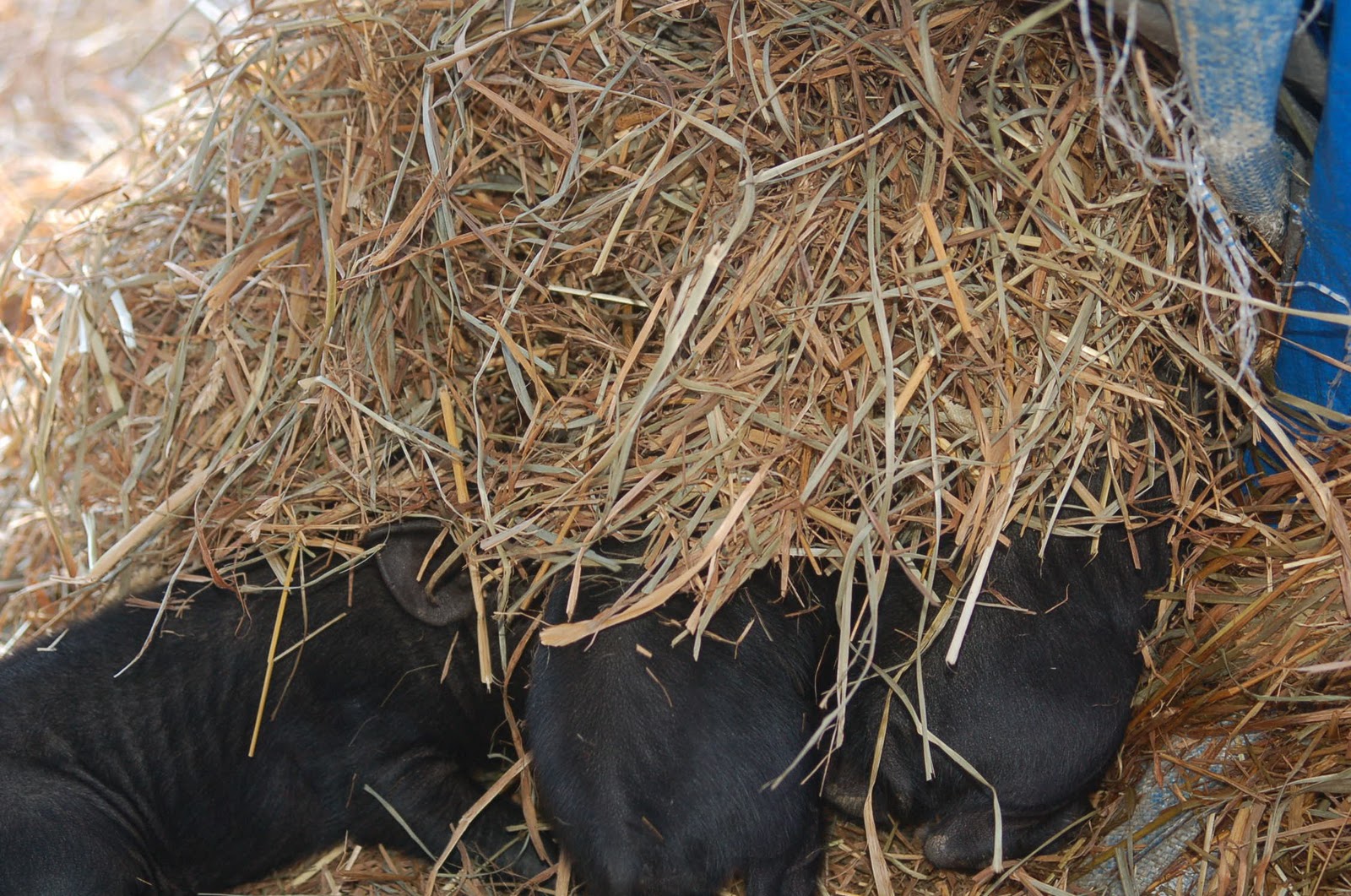
Our first piglets born on the farm were delivered this week.  Our adult Ossabaw Island Sow (Daphne) had four healthy piglets on Wednesday and they are all doing fantastic.  There are two color variations with the Ossabaws - Black and varied color.  We got three black and one multicolored piglet this time.


Four is a pretty small litter for pigs, but the Ossabaws throw pretty small numbers compared to the refined breeds that can easily produce over ten piglets in a litter.  This is due to the fact that the Ossabaw Island breed has been genetically isolated for 500 years and adapted to some pretty harsh conditions on the island.  I'm hoping to get slightly better numbers in warmer weather, however.


The Ossabaws are very hearty and don't need a lot of extra shelter.  The shed in the background was crushed in the blizzard last year, but the pigs aren't very picky on aesthetics.  Some dry hay and a little tarp covering and they are good to go.

Sunday, January 30, 2011

Goose Prosciutto: Charcutepalooza - Challenge 1

I was very excited to stumble across the Charcutepalooza challenge a couple weeks ago and somehow manage to slide in my blog at the last minute.  Since we started raising heritage pigs two years ago in an effort to rediscover the lost taste of pork, I have been seeking out resources on artisanal and traditional uses of the animal.  One of the best is the book "Charcuterie", by Michael Ruhlman & Brian Polcyn. When I saw the cooking / blogging competition at Mrs Wheelbarrow's Kitchen based on this book I couldn't resist testing out the blend of my farming and culinary interests.  As much as possible I will be using meats that we raise on our property for the project.  We'll see how practical that is, but if I can pull it off with a few of our own animals it would be fantastic.

Goose in Center for Proscuitto
The fist of twelve challenges is duck prosciutto, which is a straightforward salt cured dish that is very good as  a start to curing at home.  Luck has it that I didn't have duck on hand (we will be raising Muscovies in 2011), but we did happen to have some geese that we raised for the holiday season.  Geese have proven to be easy and inexpensive to raise, as they graze on grass and weeds and pretty much take care of themselves.  But don't let their photogenic pastoral beauty fool you - they are monsters when they chase the kids around the property and leave a horrifying mess in the most inconvenient of places.

Cleaned & Ready for Creativity
The elegant depth of a well prepared goose is hard to pass up, however.  The stuffed holiday goose was fantastic and we also just finished a goose confit that was mind blowing.  Plucking and cleaning a goose is a rather steep commitment, so I like to make sure the final dish is one to be memorable. So off we go to the recipe.


Ready to Go

First the breasts are carefully removed, which will be used for the main dish.  The thighs and legs are cut away for confit and the rest of the parts will be used for stock.  Goose makes a wonderful silky stock that adds a delicate richness to certain soups that is hard to achieve with chicken.  There's a fair amount of fat left on the carcass, which I will render from the stock pot and use for confit and pan frying.


Basic Salt Curing


Next, the breasts are covered in Kosher salt and refrigerated for 24 hours.


Salted Goose Breast


After 24 hours, the goose breasts are rinsed with water, patted dry, seasoned and wrapped in cheesecloth for drying.  One of the breasts was covered with white pepper, which is straight from the duck prosciutto recipe in "Charcuterie".  The second was covered with a mix of white pepper, juniper berries, thyme and cracked black peppercorns.


Salt & Sugar Cured Salmon
As a side note, being a bit of an efficiency freak when it comes to food, I dropped a salmon fillet I had on hand into the remaining salt cure and topped it off with some additional salt, dill, table sugar and brown sugar.  These are the basic ingredients I use for Gravlax minus the brandy (which I'm terribly allergic to).  I also took a tip from Michael on this recipe as well and doubled the amount of sugar I typically use.


Hanging to Dry
Back to the goose. After the goose breast was seasoned and wrapped in cheesecloth, they were hung in our pantry, which is semi unheated.  It is attached to our kitchen, but doesn't have a heat source and sits on stilts, so it get's cold when closed off.  The conditions there aren't ideal, but are the best in the house.  My estimate is the temperature fluctuated between the low 40s and high 50s during the drying process.  It was also drier than ideal, but the goose didn't seem to mind and it came out very well.


Goose Prosciutto
The goose had a huge layer of fat and was quite a bit thicker than duck, so I let it dry a few extra days.  At day 12 it was ready to pull down and use.  The extra time added a crust to the meat side of the breast, but wrapping it in plastic softened it up quite a bit and it sliced beautifully.  I can't wait for book club tonight where I'll be serving a platter of homemade charcuterie including the goose prosciutto, cured salmon, venison chorizo and goose rillettes.


Goos  Prosciutto: Charcutepalooza on Punk Domestics


Sunday, November 21, 2010

Creative Problem Solving

As a technologist and an IT engineer at heart, I have developed a real passion for solving problems and figuring out ways to make things efficient.  Farm projects provide a lot of opportunity for this and are a great hobby for keeping these skills sharp.

So here's problem number one.  The builder of our house put the pressure tank for the well and the associated plumbing in a small shed, which we call the pump house.  I think the reason for this was to reduce the Summer humidity in the house by keeping the condensation buildup on the tank in a separate building.

Pump House
Unfortunately, this also means another space that needs to be heated in the winter, which we've done with space heaters and electric pipe warmers, an expensive and risky approach.  Last year I tried just going with the pipe warmers and in the middle of preparing Christmas Eve dinner we had a sudden drop in water pressure.  After some inside troubleshooting I trudged through two feet of snow to find the pump house flooded and water spraying everywhere from a burst pipe because of a failed warmer.  Some quick pipe sweating and dinner was back on track, but the moist warm environment ended up becoming a neon sign for Norway Rats, who proceeded to tear apart the fiberglass insulation throughout the shed.

Problem number two is that we've been pretty lax with our layer chickens and they've gone pretty much rogue.  They've scattered themselves around the property and have taken to sleeping in the trees.  They have also found alternative spots for laying eggs and I haven't been able to track them down, except for stumbling on an occasional nest, which we won't use.  At some point I'll take on capturing the birds and confining them to the portable coop to "train" them to lay in the box, but sometimes it's as easy to start with some fresh chicks.

A while back I found a clutch of eggs in the woods and threw these and a few others in the incubator.  When they hatched, the pump house got cleaned out and the brooder relocated inside.

Blue Pressure Tank & Brooder
The heat lamp needs to be on for the chicks, why not have it do double duty and eliminate the need for the other heaters in the pump house?  So far it's working great and we'll have a fresh batch of layers producing in the Spring.  I wish I had thought of this last year.

Wednesday, November 17, 2010

The Downside of Farming

Most of the time I spend thinking about farming it's about the positive aspects of generating our own food and improving the land.  Things like appreciating superior food quality, the joy of watching livestock antics and the satisfaction of helping to preserve the genetic diversity of critical species.  But the farming experience is certainly filled with it's share of challenges.  It's not too hard to move on after a crappy corn season due to a drought, peas that went from seed to the compost pile from a sudden heat wave, or an epidemic season of squash bugs wiping out the majority of Cucerbits.  And then there are the real problems...

A couple weeks ago I moved the broilers out to pasture.  The hatchery was back ordered this fall, so our chicks arrived about a month after I had originally planned, which pushed the raising period into cool / cold weather. 

Moving Chicks to Pasture
About 10% of the flock died from the cold the first two nights outdoors, but the rest adapted well and really started to put on some weight.  That's a pretty big loss ratio for us, but it's recoverable.  About two weeks later, I went to the coop for morning feeding and all but three birds had been killed by a predator.  By the nature of the kill, my estimation is that one or more weasels dug through the coop and went on a killing spree.  A weasel will go after young poultry and basically kill everything in sight.  They bite the head off a chick, lick the blood pumping out and move on to the next one.  The really disturbing part is they don't eat much and leave the carcasses behind - a total waste.  I'd much rather have a fox in the hen house.   A fox will grab a couple birds and drag them away, but at least they eat what they kill like a respectful hunter.

So that's the end of our fall chicken project.  We're close to finishing the meat we've been keeping from our summer broilers and the next batch won't be ready until May or June, so it's probably back to grocery chicken for a while.  At least I'll get a chance to appreciate what I'm missing in the meantime.

Saturday, October 9, 2010

Animals Should be Happy

We do our best to make sure our animals are treated right.  Beyond just being the right thing to do, it makes managing them that much easier.  Siruis Black is our new registered Berkshire boar.  He's about 25 or 30 pounds right now and he loves to get pet.  We're working on having him establish a strong relationship with people so when he's 500 pounds he's safe to be around.

Sirius Black

If you get him at the right time and the right spot, he'll sit and lie down like a dog.


Jack is our new Angora goat.  He's a sweetheart.  He jumps up to be pet and grab a snack.  I've been trying to break one of our dogs of that habit for the last year, but it's a neat habit with a goat.

Jack the Angora Goat

Of course making the animals happy is sometimes easier said than done.  I'm doing some shuffling with the goats to move our pygmy buck Otis out of the pygmy herd so our new Angora Buck, Jack, can join the girls.  We're starting a line of Pygora Goats and the two bucks will be sires for different genetic lines so we can produce breeding pairs of the Pygoras.  Let's just say that Otis is not a happy Camper.  He's a rather jealous bully at this point and is insisting on escaping from whatever fencing solution I put together to keep him separated.  Hopefully he won't hold a grudge too long.

Otis, angry & waiting for a quick fence repair

Friday, October 8, 2010

Ever wonder what a hundred chickens look like?

Chicks in the Mail

Where do Chickens come from?  The US Postal Service, of course.


Our chicks arrived in the mail this morning from the hatchery.  The post office is usually anxious to move them along and gladly opens their doors early.  We got a batch of 100 Cornish Cross Cockerels from Purely Poultry, where we've had a lot of luck in the past.  Only one chick died in shipment (which is a really good shipment) and they always throw in a few extras to cover a couple losses, so we're starting off with 103 birds.


They are cute little fuzzballs when they arrive.  That warm feeling only lasts a few days and then it becomes apparent that these birds are simple eating machines.  These guys were hatched & shipped on Wednesday and arrived early Friday morning.  Just before a chick hatches is sucks up the last of the yolk and has about 72 hours of nutrition and fluid in its system, which makes ordering birds through the mail feasible.

Getting the chicks through the first three days is the real trick.  After setting them in the brooder, they get access to fresh water and chick starter feed, but there are usually a few that don't quite figure out the system at first.  We lost a couple birds in the first two hours because the crawled into the waterer and chilled themselves to death.  Did I mention that chickens aren't the brightest of animals?

Wednesday, October 6, 2010

Pigs

Growing up I was never a big fan of pork. However they were prepared, pork chops usually came out with a bland flavor and texture similar to cardboard. The Holiday ham was good to look at, but once I got past the salt and cloves there wasn't much flavor that jumped out. Every once in a while a dish would stand out, like the smoked, dry cured Virginia Bacon I picked up in Williamsburg, but in general I've passed over the pork section of supermarket for most of my life. At some point I realized I was missing out on something.

A few years ago I started reading about heritage pigs and began to consider raising our own. Our farm is mostly wooded and there is little space for grazing animals, so pigs make a lot of sense for our landscape. I found an opportunity to have a wonderful pork loin from a Berkshire / Tamworth cross when I was on a business trip and that made up my mind. It was like nothing I had tasted before. It was juicy, filled with sweet balanced flavor and had the texture of a tender steak. I was hooked and set on a path to recapture the lost flavor of pork.

Currently, we are building two herds of heritage pigs and are in the process of establishing quality breeding lines for Berkshire and Ossabaw Island pigs. We will be selling piglets and meat once the herds are established and producing.

Monday, October 4, 2010

Surprise in the Chicken Coop

A few days ago I was checking over the chicken tractor in anticipation of our next batch of broilers and what a surprise was waiting for me.


The Black Widow is such a pretty spider, but not one to get close up and personal with.  I finally got around to smashing it this weekend so I could start using the feed hopper again.  Luckily she hadn't reproduced yet, which I could tell by the presence of the male close by.  Part of the mating ritual of Black Widows often involves the female eating the male for extra nutrition.